
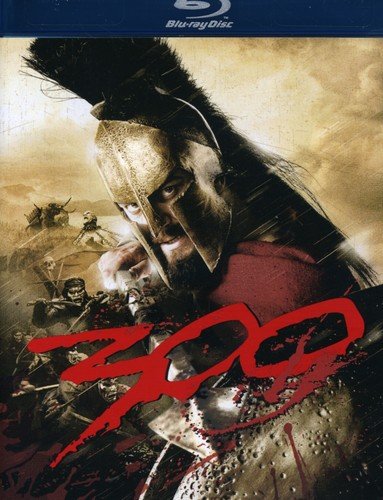
Released in 2006, "300" stands as a monumental achievement in cinematic history, blending historical narrative with groundbreaking visual artistry. Directed by Zack Snyder and adapted from Frank Miller's graphic novel, the film offers a stylized retelling of the Battle of Thermopylae, where King Leonidas of Sparta leads 300 warriors against the vast Persian Empire.

Plot Overview
The narrative unfolds through the eyes of Dilios, a Spartan soldier who recounts the legendary stand of King Leonidas and his 300 warriors. Facing overwhelming odds, these warriors embody the Spartan ethos of honor, courage, and sacrifice. Their unwavering commitment to freedom and their homeland becomes a beacon of inspiration, not only for their fellow Spartans but for all of Greece.

Visual Style and Cinematography
One of the most striking aspects of "300" is its visual style. The film employs a unique color palette, with rich reds and browns, creating a visceral and immersive experience. The use of slow-motion sequences accentuates the intensity of battle scenes, allowing viewers to appreciate the choreography and the emotional weight of each moment. This visual approach has been both praised and critiqued, with some viewing it as a revolutionary technique in filmmaking, while others consider it overly stylized.
Critical Reception
Upon its release, "300" received mixed reviews from critics. On Rotten Tomatoes, the film holds an approval rating of 61% based on 238 reviews, with an average rating of 6.10/10. The site's critical consensus reads, "A simple-minded but visually exciting experience, full of blood, violence, and ready-made movie quotes." Metacritic assigns the film a score of 52 out of 100, indicating "mixed or average reviews." Despite the critiques, the film garnered a strong fan following and achieved significant box office success, grossing over $456 million worldwide.
Themes and Controversies
"300" delves into themes of heroism, sacrifice, and the clash of civilizations. However, it has also been the subject of controversy due to its portrayal of the Persian Empire. Some critics argue that the film's depiction of Persians as monstrous and effeminate perpetuates negative stereotypes. Additionally, the film's historical inaccuracies and stylized violence have sparked discussions about its impact on viewers' perceptions of history and culture.
Legacy and Influence
Despite the controversies, "300" has left an indelible mark on popular culture. Its influence is evident in various media, including films, video games, and literature. The film's success led to a sequel, "300: Rise of an Empire," released in 2014, which explores the events leading up to and following the original battle. The legacy of "300" continues to be a topic of discussion among film enthusiasts and scholars, reflecting its complex blend of artistic innovation and contentious representation.
Conclusion
"300" remains a significant work in the realm of historical epics, offering a stylized and intense portrayal of one of history's most legendary battles. Its visual style, compelling narrative, and the performances of its cast contribute to its enduring appeal. While it may not be a traditional historical account, "300" serves as a testament to the power of storytelling and the impact of cinema in bringing history to life.