
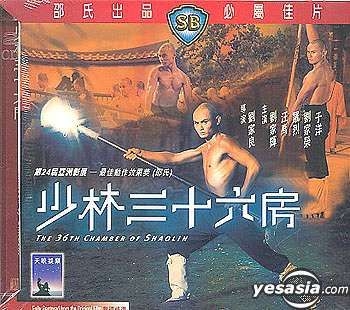
Released in 1978, "The 36th Chamber of Shaolin" stands as a seminal work in the martial arts genre, captivating audiences with its compelling narrative and exceptional choreography. Directed by the legendary Lau Kar-leung and produced by Shaw Brothers Studio, the film has garnered critical acclaim and remains a timeless classic.

Plot Overview
Set during the oppressive Manchu rule, the story follows Liu Yude (Gordon Liu), a young man whose village is ravaged by the tyrannical General Tien Ta (Lo Lieh). In the wake of his family's destruction, Liu seeks refuge at the Shaolin Temple, renowned for its martial arts prowess. Determined to avenge his loved ones, he embarks on a rigorous journey through the temple's 35 chambers, each designed to master a specific martial art technique. His ultimate goal is to establish the 36th chamber, dedicated to training common people in martial arts to combat oppression.
Cultural Impact and Legacy
"The 36th Chamber of Shaolin" has left an indelible mark on popular culture. Its influence extends beyond cinema into music, notably inspiring the Wu-Tang Clan's debut album, "Enter the Wu-Tang (36 Chambers)." The film's themes of resilience and justice continue to resonate, solidifying its status as a cornerstone of martial arts cinema.
Critical Reception
Critics and audiences alike have lauded the film for its authentic portrayal of martial arts training and its engaging storyline. On IMDb, it holds a rating of 7.6 out of 10, reflecting its enduring popularity. Time Out magazine ranked it 22nd in their list of the 100 best action movies, underscoring its significance in the genre.
Conclusion
"The 36th Chamber of Shaolin" is more than just a martial arts film; it is a testament to the human spirit's capacity for growth and resistance against tyranny. Its legacy endures, inspiring new generations to appreciate the art of kung fu and the power of storytelling.